An interview with Assoc. Prof. Dr. Tran Trong Dao in the HCMC Journal of Science
On the occasion of Vietnam Science, Technology, and Innovation Day (18 May), Ho Chi Minh City Journal of Science conducted an interview with Assoc. Prof. Dr. Tran Trong Dao, President of Ton Duc Thang University (TDTU), on the University’s strategy for science and technology development, the establishment of an international research environment, and the implementation orientation of Resolution No. 57-NQ/TW at the University.
Science, Technology, and Innovation are key pillars
Assoc. Prof. Dr. Tran Trong Dao: TDTU identifies science – technology, innovation, and digital transformation as core foundations in its strategy for developing a research-oriented university in line with international standards. Therefore, over the years, the University has consistently implemented comprehensive policies aimed at building a professional research environment for lecturers and researchers.
Key priorities include investing in modern research infrastructure, developing strong research groups, providing financial support for research projects and international publications, and expanding academic cooperation with prestigious universities and research institutes around the world.
In addition, the University prioritizes research with practical application value, closely linked to socio-economic development needs and strategic technologies such as artificial intelligence (AI), unmanned aerial vehicles (UAVs), semiconductor technology, advanced materials, digital transformation, and renewable energy.
Assoc. Prof. Dr. Tran Trong Dao: In my view, these achievements stem from three fundamental factors that the University has consistently developed over many years.
First is the University’s long-standing and consistent development orientation, which regards scientific research as the foundation for enhancing training quality and international academic standing.
Second is a highly integrated academic environment. Currently, TDTU maintains an extensive cooperation network with universities and research institutes worldwide. Nearly 200 visiting professors, adjunct professors, and international lecturers are participating in research, teaching, and collaboration activities at the University, including many scientists ranked among the world’s top 1%.
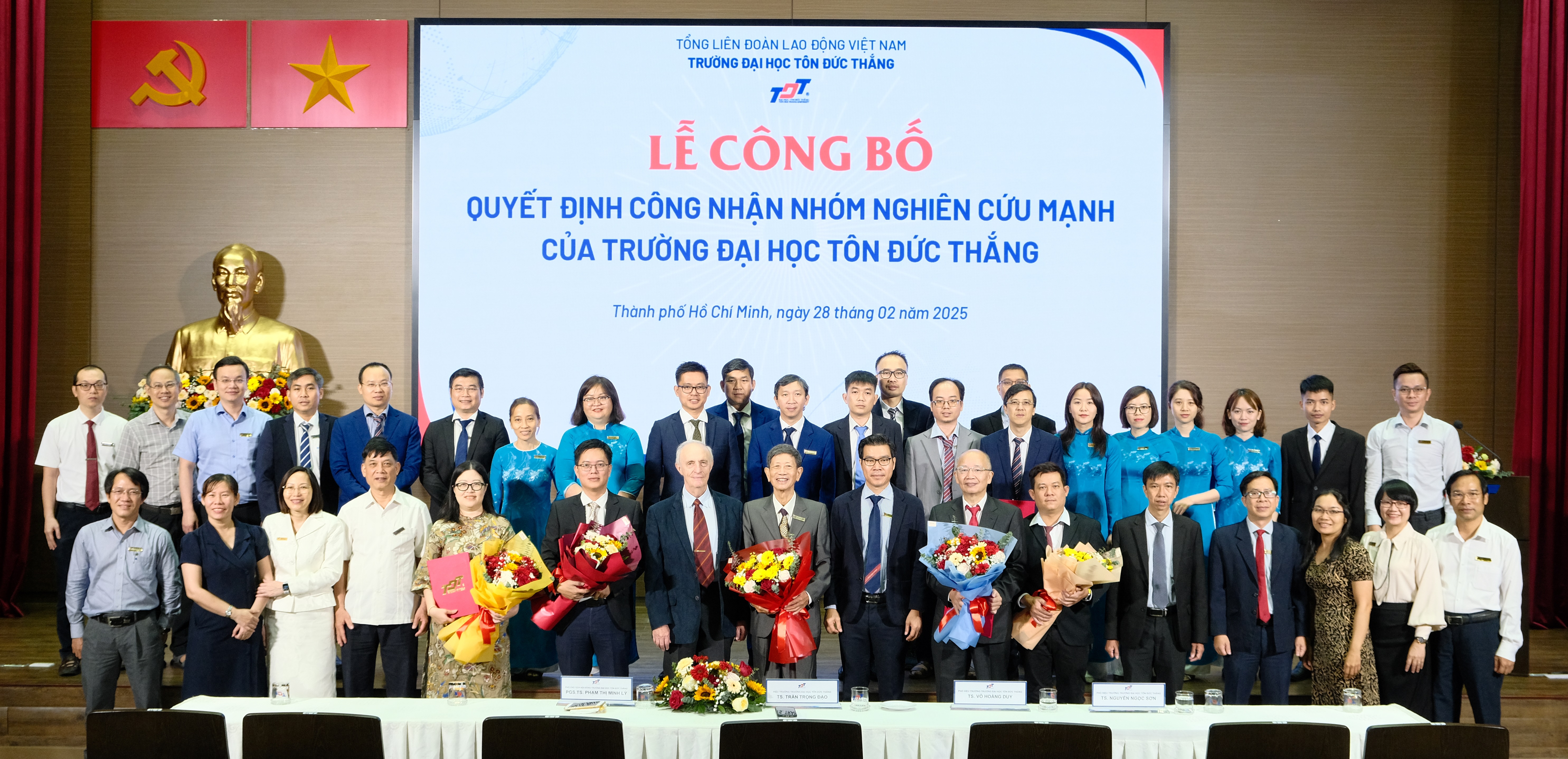
Third is systematic investment in research infrastructure and support mechanisms. The University has established 11 strong research groups, invested in specialized laboratories and high-performance computing systems, and developed interdisciplinary research centers aligned with practical demands and emerging technological trends.
Thanks to this orientation, TDTU’s scientific research activities have achieved significant progress. To date, the University has published more than 13,850 papers in international journals indexed in the WoS and Scopus databases. Notably, the proportion of Q1 publications has continuously increased over the years, reaching nearly 50% of total publications in 2025. In particular, papers ranked among the top 1% by discipline account for approximately 8% of the total output.
In addition, the University has been granted 15 patents by the United States Patent and Trademark Office (USPTO), along with numerous other patents and utility solutions that have been applied in practice.
An international academic environment creates conditions for scientific development
Assoc. Prof. Dr. Tran Trong Dao: TDTU currently implements a wide range of integrated support mechanisms for lecturers and researchers.
In terms of resources, the University allocates substantial funding for scientific research activities, while investing in laboratories, scientific databases, and facilities serving specialized research.
At the same time, TDTU places strong emphasis on developing a high-quality scientific workforce based on criteria such as academic titles, qualifications, H-index indicators, and citation impact. The University has also introduced various reward policies for researchers with outstanding research achievements.
The University continues to strengthen cooperation with universities ranked among the world’s top 500 and to expand its network of international adjunct professors.
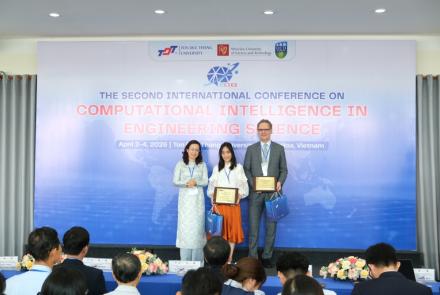
From an academic perspective, TDTU regularly organizes and co-organizes international scientific conferences such as AETA, ICFE, I-CAS, CUTE, and AsiaPharm. These academic forums bring together numerous domestic and international scientists, enabling lecturers and researchers to expand their international research networks.
In particular, TDTU currently develops two English-language scientific journals. Among them, the Journal of Information and Telecommunication (JIT) is the first and only journal in Vietnam in the field of Computer Science to be indexed in both Web of Science and Scopus in the Q1 category.
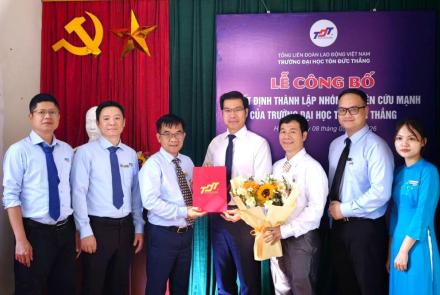
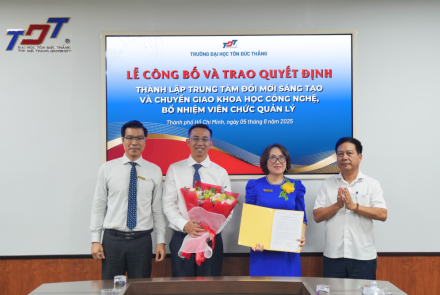
In 2025, the University also established the Institute for Advanced Study in Technology in Hanoi and the Center for Innovation and Technology Transfer to strengthen connections among the University, the State, and enterprises, while promoting technology transfer and the commercialization of research outcomes.
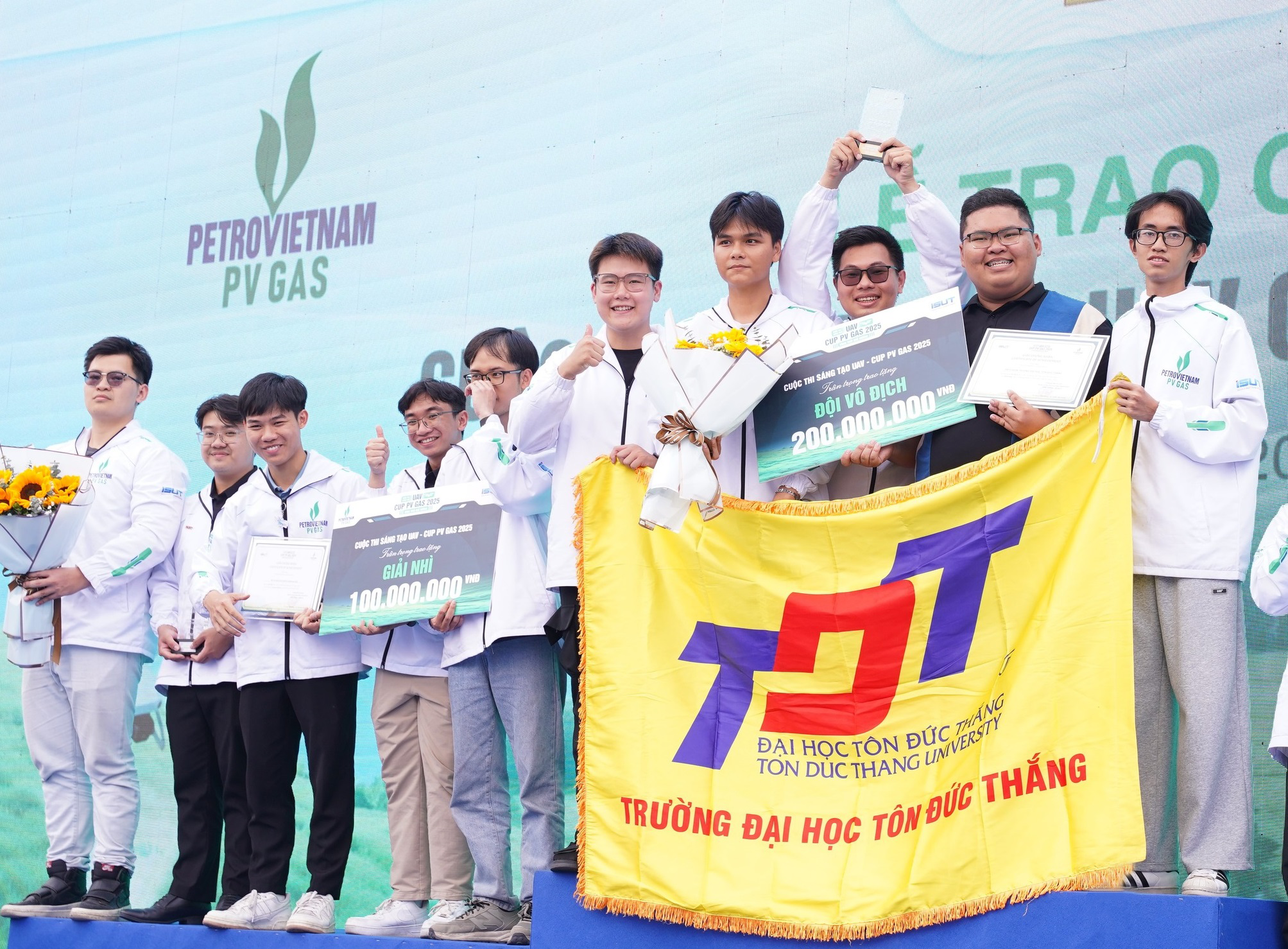
At the same time, TDTU pays special attention to scientific research activities among students, particularly in strategic technology fields such as AI, UAVs, and data science. The University initiated an international UAV competition in 2024, and its student UAV team has recently won the championship title at the UAV PV GAS Cup 2025.
The spirit of Resolution 57 drives innovation and digital transformation in higher education
Assoc. Prof. Dr. Tran Trong Dao: Resolution No. 57-NQ/TW holds significant importance for higher education institutions, particularly those pursuing a research university model.
For TDTU, Resolution No. 57-NQ/TW provides both a strategic orientation and an important policy framework for universities to strengthen their role as central actors within the national science, technology, and innovation ecosystem.
The spirit of the Resolution is also closely aligned with the direction that TDTU has consistently pursued over many years: integrating scientific research with innovation, technology transfer, and the country’s practical development needs.
In the coming period, the University will continue to focus on developing strategic technology fields, promoting the “University – State – Enterprise” cooperation model, enhancing applied research capacity, and strengthening international integration in science and technology activities.
Assoc. Prof. Dr. Tran Trong Dao: At present, international competition in terms of publication quality, research capacity, and participation in global academic networks is becoming increasingly intense.
At the same time, developing a high-quality research workforce, particularly in strategic technology fields such as AI, semiconductors, and high technology, poses significant demands in terms of talent attraction, training, and retention mechanisms.
In addition, scientific research requires long-term investment, while current financial mechanisms for science and technology still need to be further improved towards greater flexibility, enabling universities to enhance their autonomy and creativity.
In the context of increasingly competitive global academia, such pressures also serve as a driving force for universities to pursue stronger innovation in governance, research quality, and international integration capacity.
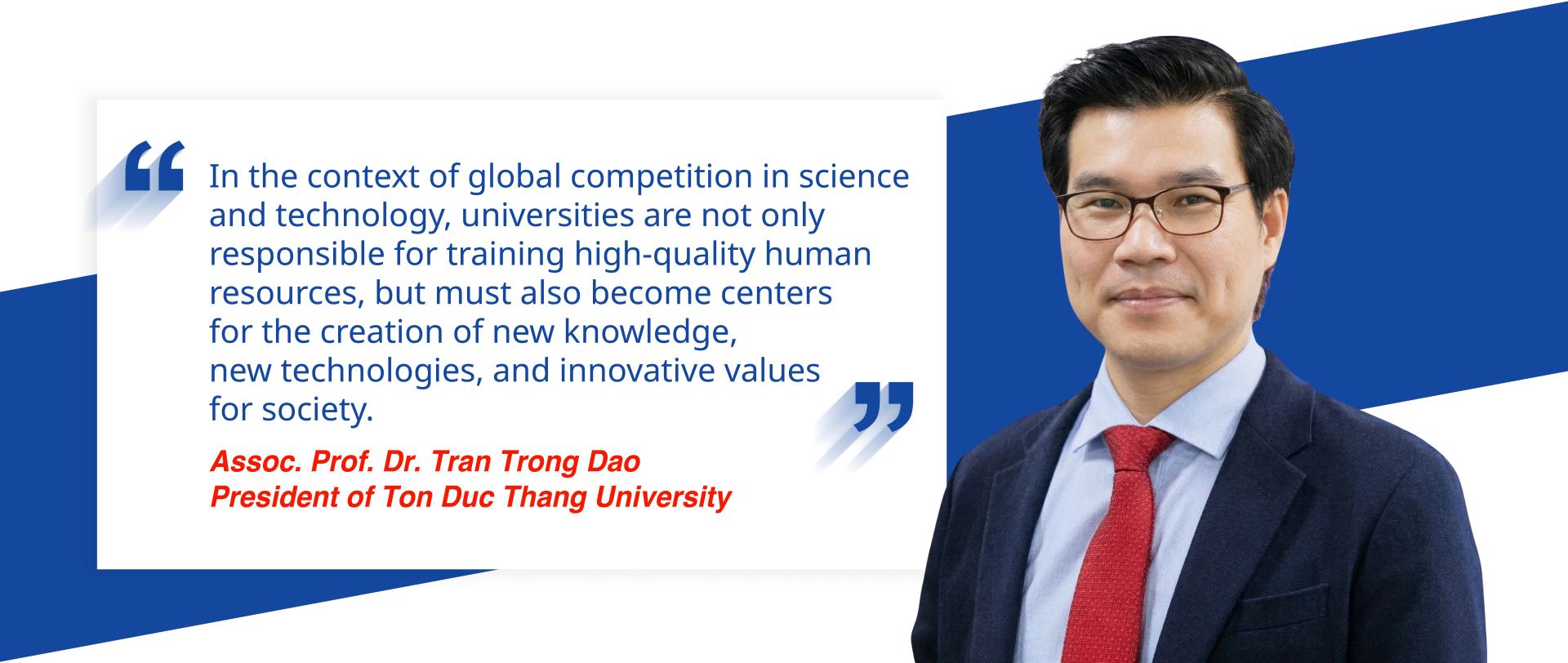
Assoc. Prof. Dr. Tran Trong Dao: In the coming period, TDTU will continue to pursue its strategy of developing a research-oriented university in line with international standards, with science, technology, and innovation remaining key priority areas.
The University will continue investing in the development of strong research groups, expanding internationally collaborative research groups, interdisciplinary research centers, and specialized laboratories, while further strengthening cooperation with leading universities, research institutes, and technology enterprises.
In addition to increasing the number of high-quality international publications, TDTU also places particular emphasis on enhancing the quality of applied research, promoting technology transfer, and commercializing research outcomes to serve the community and businesses.
Furthermore, the University will continue focusing on strategic technology fields such as AI, UAVs, digital transformation, semiconductors, biotechnology, and data science, thereby making active contributions to the national goals for science, technology, and innovation development in the spirit of Resolution No. 57-NQ/TW of the Politburo.
Thank you for sharing your insights with us.
Interview conducted by Cong Chuong
Source: HCMC Journal of Science