Vietnamnet: Why International Joint Programs Are Increasingly Attracting New Students
Flexible study pathways, optimized costs, and opportunities to experience a multicultural learning environment without leaving Vietnam are making international joint programs an increasingly attractive choice for many new university students.
A Global Mindset Among a New Generation of Students
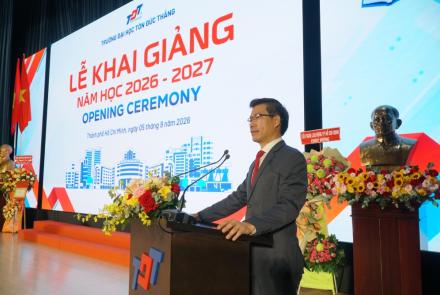
At the Opening Ceremony for the 2026–2027 academic year, more than 7,000 new students of Ton Duc Thang University (TDTU) embarked on their university journey, choosing from different academic programs and future career paths.
Among them, Pham Hong Tram Anh and Ly Hoang Bao Tran both chose international joint programs.
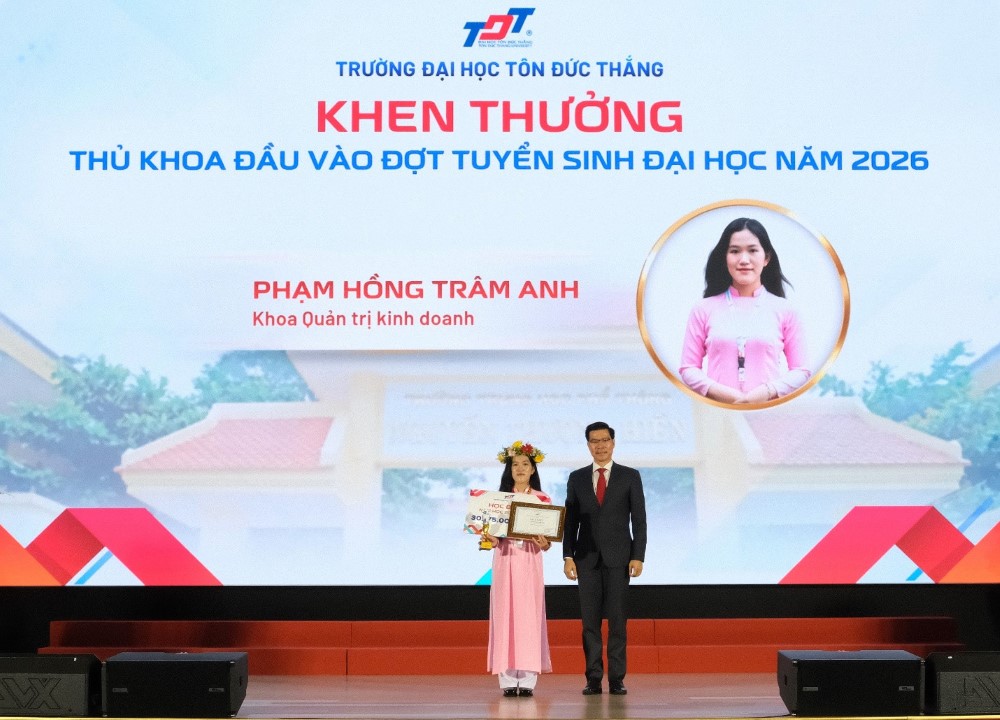
Pham Hong Tram Anh, TDTU’s 2026 valedictorian for admission, chose Business Administration through the joint program with the Prague University of Economics and Business (Czech Republic). Her decision was partly inspired by her older sister, who is also a graduate of the program. Throughout her 12 years of schooling, Tram Anh consistently ranked among the top-performing students in her class and achieved a perfect score in Mathematics in the 2026 National High School Graduation Examination.
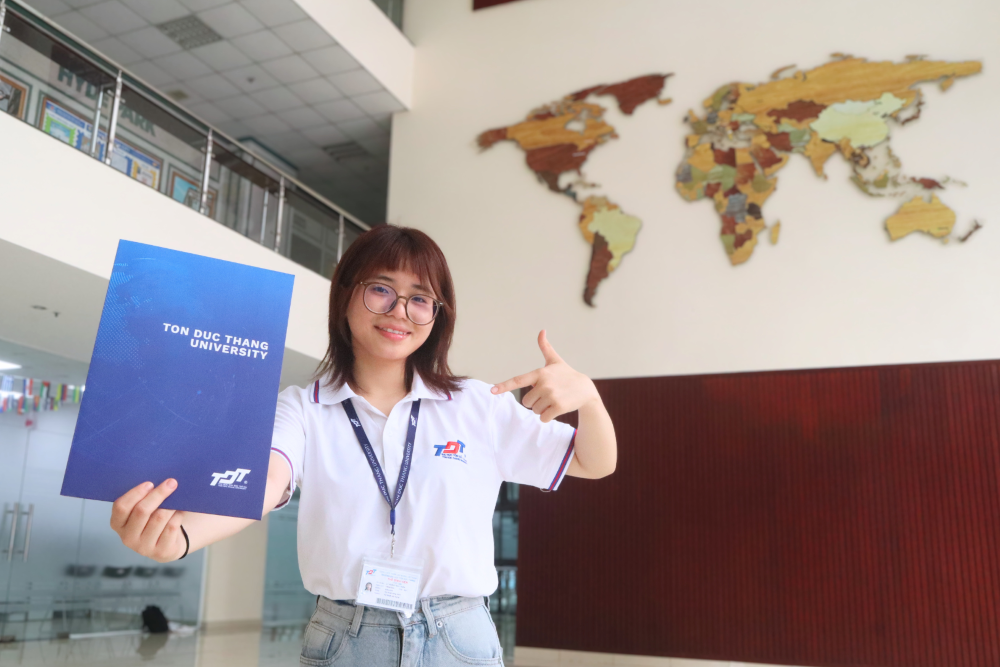
In another path, Ly Hoang Bao Tran, who holds an IELTS score of 7.0 and received a 100% scholarship, chose Civil Engineering through the international joint training program between Ton Duc Thang University and La Trobe University (Australia). Civil Engineering is often considered a field that attracts relatively fewer female students. Bao Tran shared: “I want to take part in creating useful structures for society in the future, rather than simply watching them being built.”
Lower Costs, More Time to Adapt
Choosing an international program also involves considering tuition costs and students’ ability to adapt to a new learning environment. For Tram Anh and Bao Tran, their first year at TDTU was supported by 100% scholarships, significantly easing the financial pressure of starting university. However, according to the two students, the benefits extend beyond tuition costs.
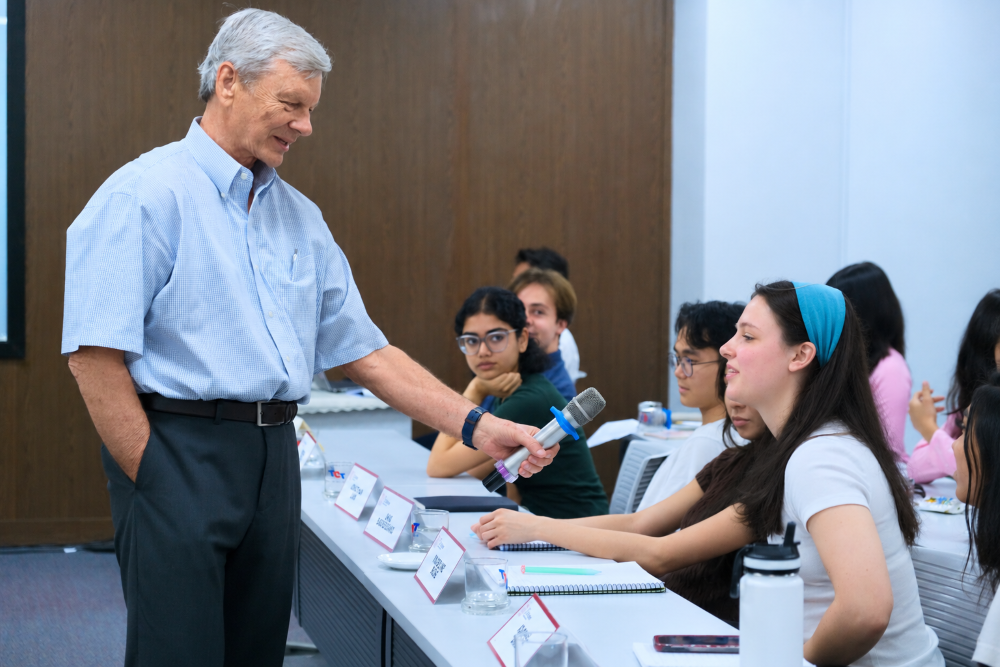
Instead of beginning their entire university journey overseas, international joint programs allow students to divide their studies into different stages, such as 2+2, 3+1, or 3+0. Under the 2+2 international joint training model, for example, students can complete their first two years in Vietnam before continuing for another two years at the partner university overseas, with the opportunity to earn degrees from both universities.
Bao Tran said she chose Civil Engineering because she could build a strong academic foundation during her first two years in Vietnam, then continue her studies in Australia, use English more regularly, and gradually adapt to an international environment.
TDTU is continuously developing and expanding joint programs with a range of international partners, including the University of the West of England, Bristol (United Kingdom), Saxion University of Applied Sciences (Netherlands), Taylor’s University (Malaysia), and Massey University (New Zealand), among others.
In addition to transfer programs, in 2026 TDTU is also offering a 3+0 Bachelor of Business program with the University of Waikato, allowing students to complete their entire degree in Vietnam and receive a degree awarded by the University of Waikato.
A Modern Learning Environment for Global Integration
Although Tram Anh and Bao Tran have chosen different fields of study, their decisions reflect a broader shift in how students view university: they are not simply choosing a place to study, but also an environment in which to prepare for their future.
For Tram Anh, one of the features she particularly appreciates is TDTU’s inspirational library, designed according to the Learning Commons model, with seven floors and a 24/7 overnight self-study area. Its spaces are designed for individual and group study, presentations, research, interaction, and access to learning resources. Notably, students are encouraged to communicate in English within the library.
For Bao Tran, an international experience is not simply about having the opportunity to study in another country. It also means using a foreign language regularly, being exposed to different approaches to learning and thinking, experiencing a multicultural environment, and developing adaptability.
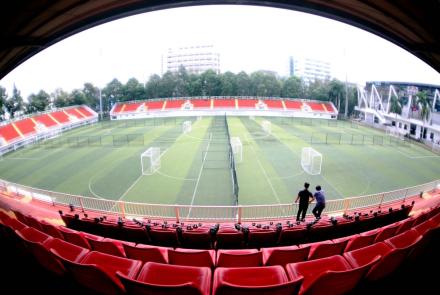
At TDTU, students not only have access to internationally oriented academic programs but also experience a modern educational ecosystem where knowledge, the learning environment, and opportunities for global integration come together to provide a foundation for their future development.
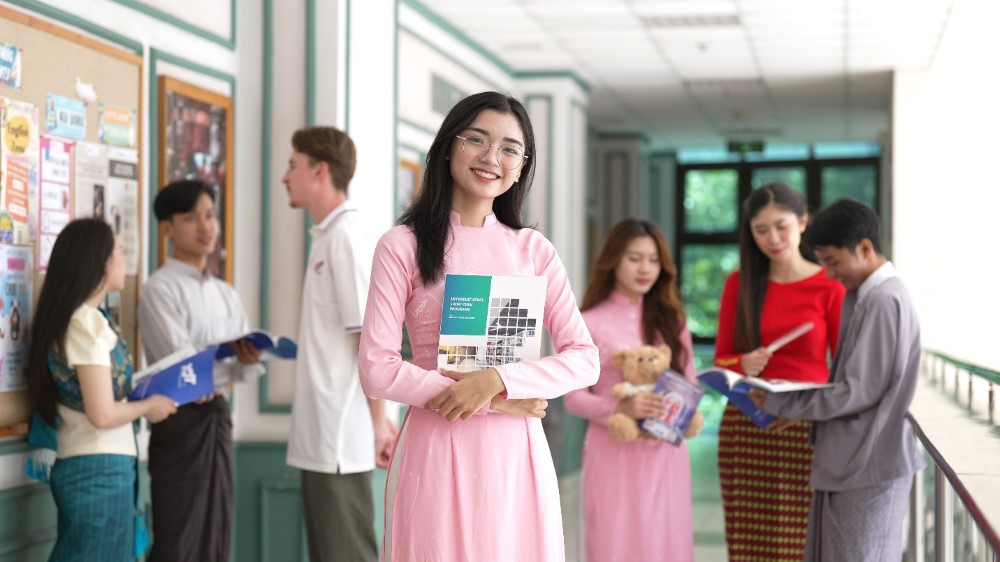
The choices made by new students such as Tram Anh and Bao Tran reflect a broader shift in how younger generations approach university selection: university is no longer simply about earning a degree, but also about developing the adaptability needed to thrive in a borderless labor market.
Until November 30, 2026, TDTU will continue to accept applications for additional admission to its international joint training programs, providing prospective students with another opportunity to choose an international learning environment and prepare to pursue their future on the global stage.
Source: Vietnamnet